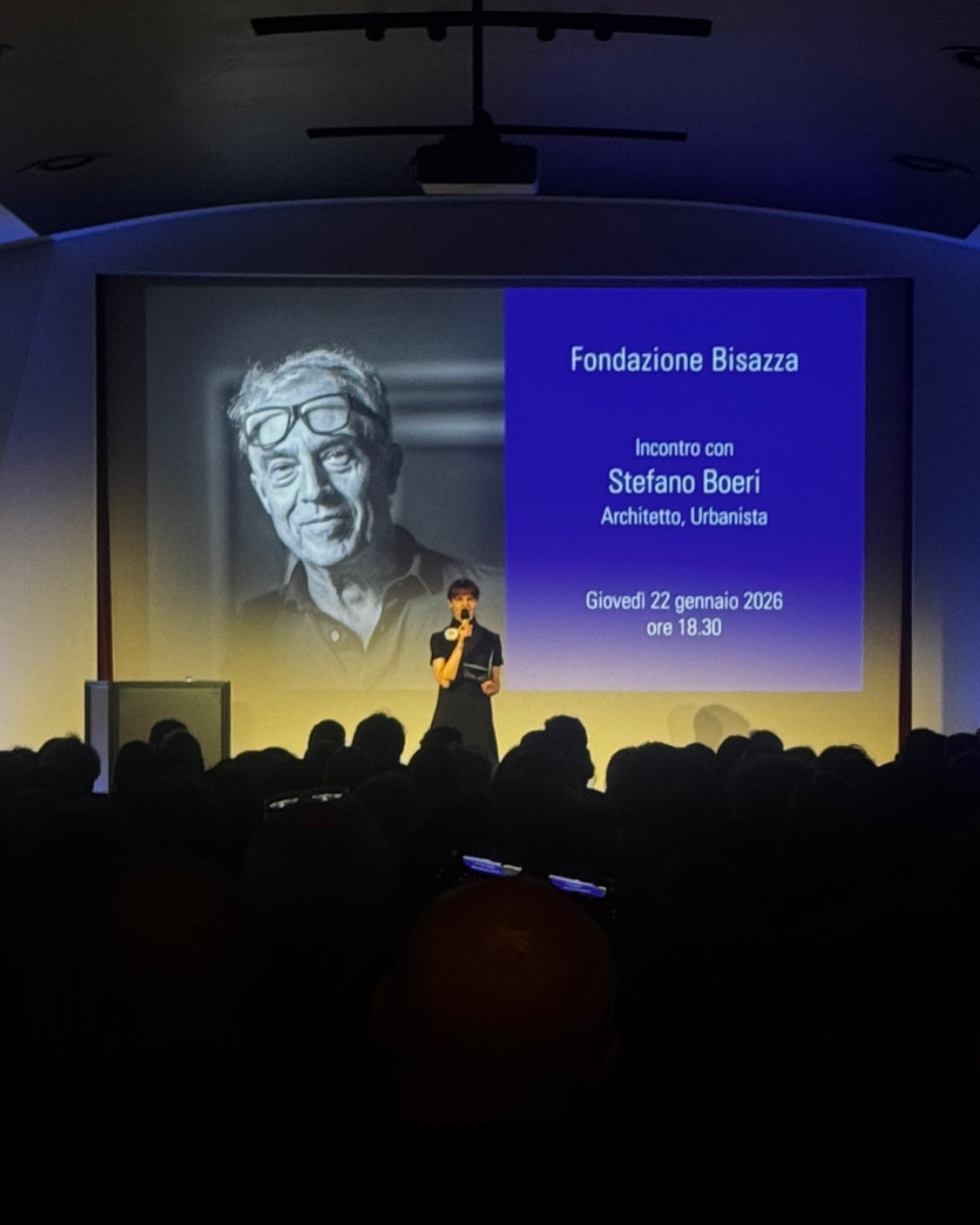
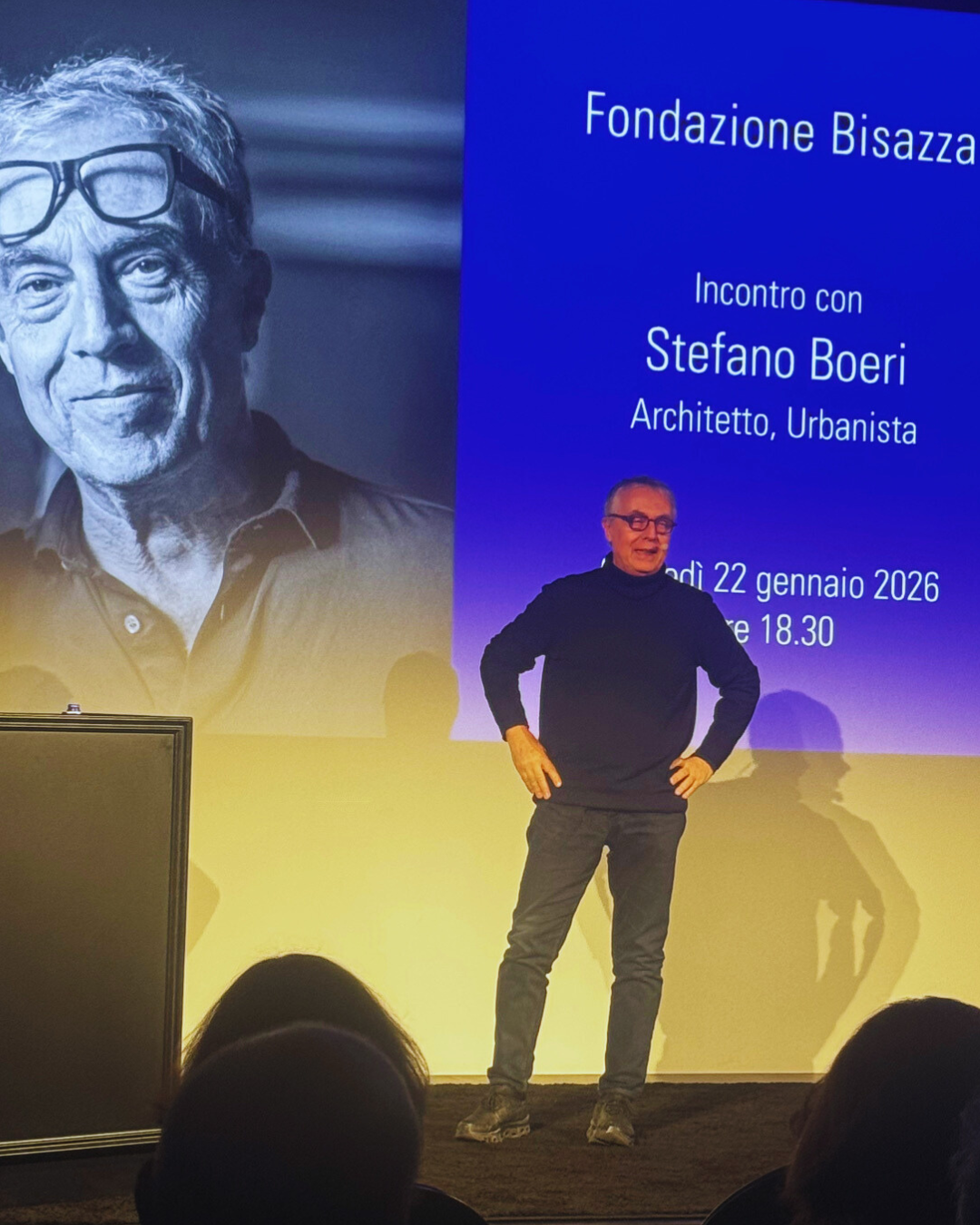
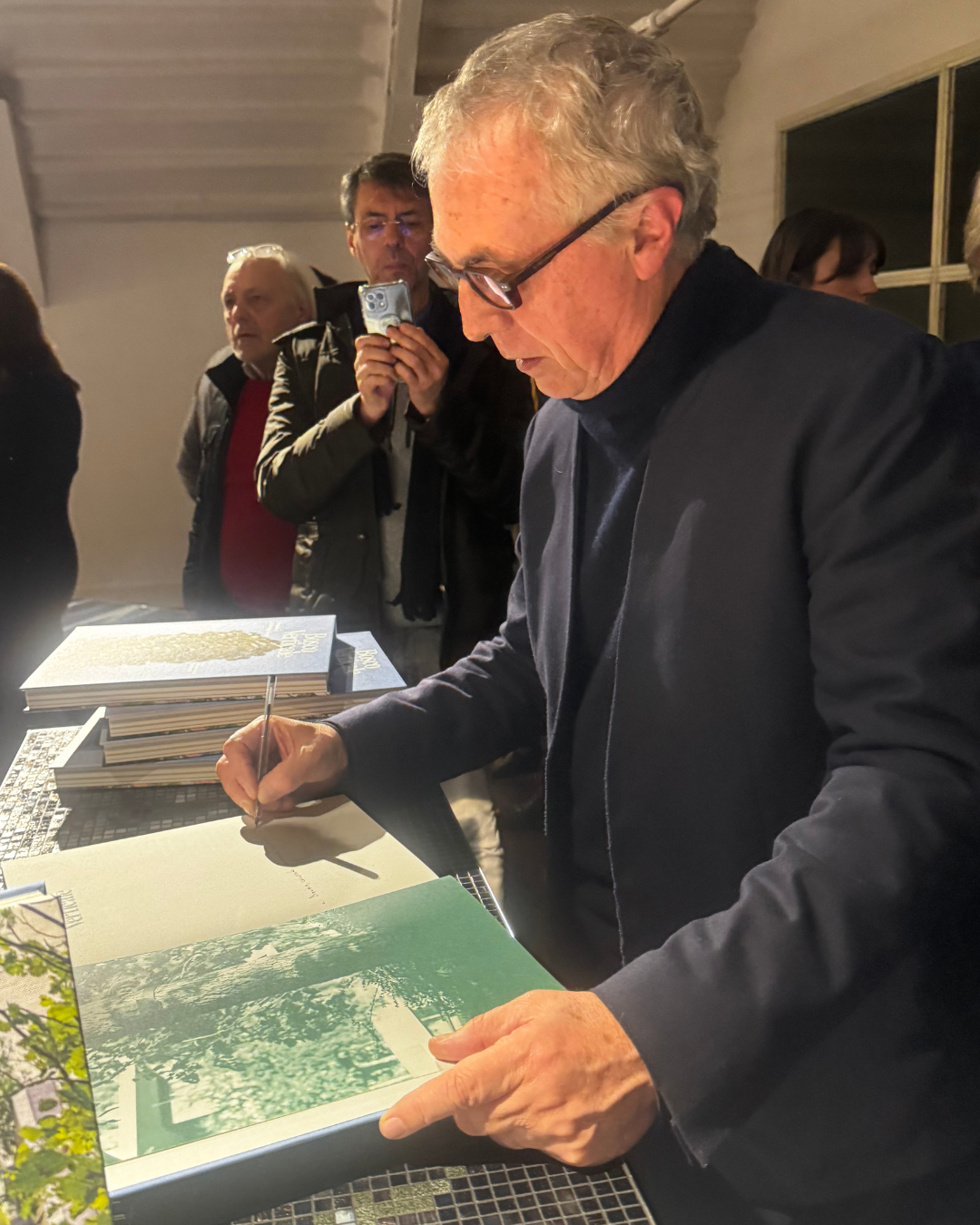
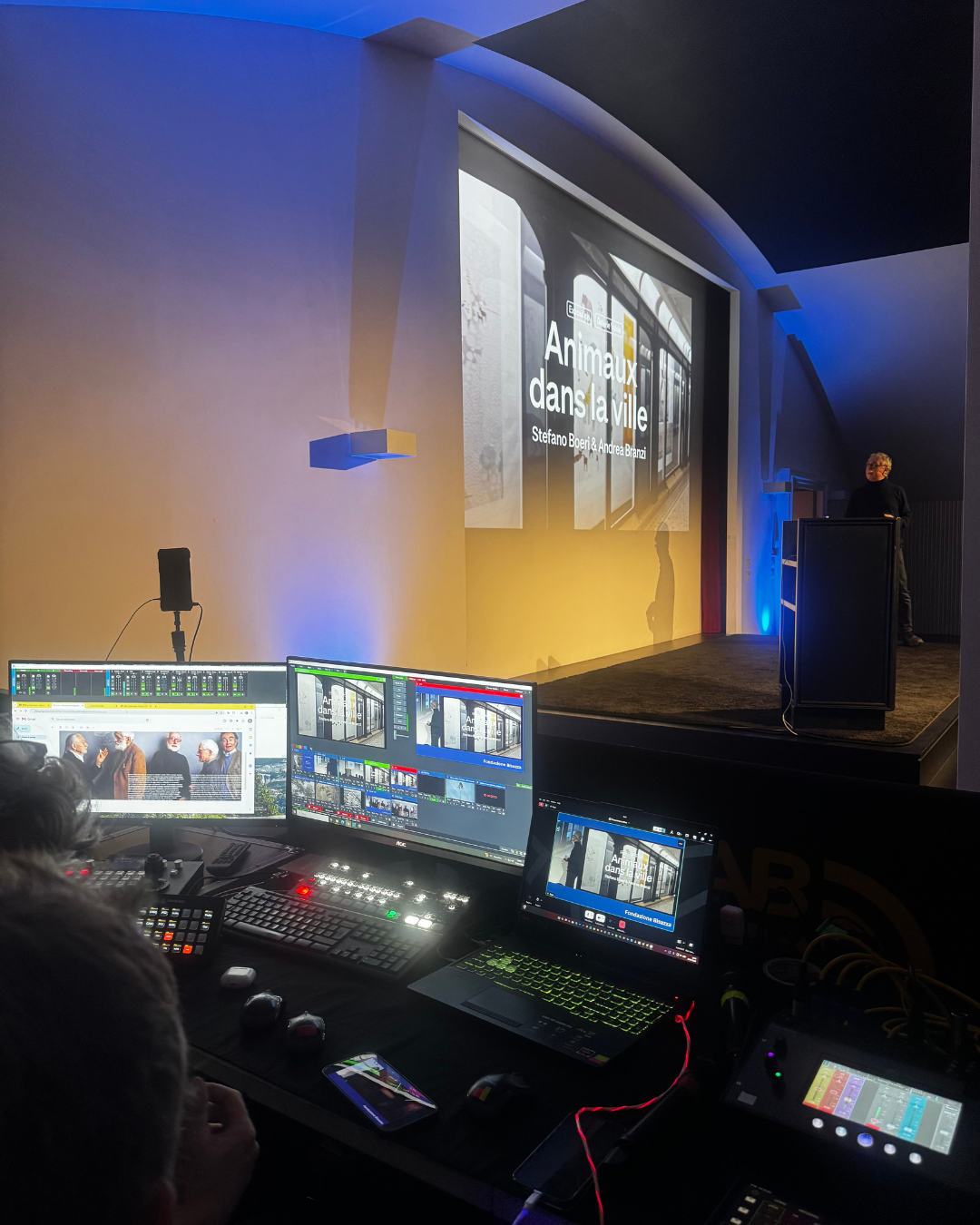
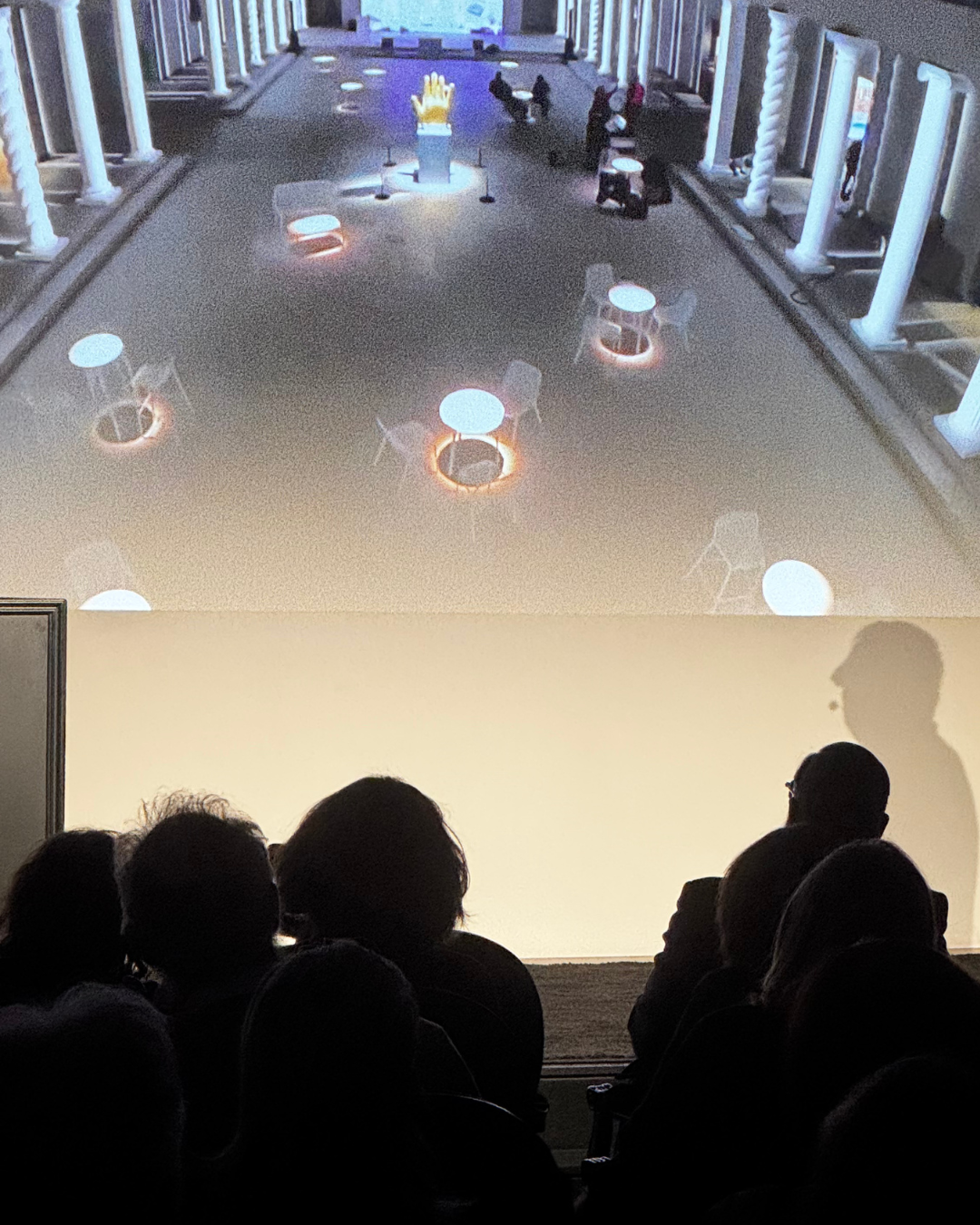
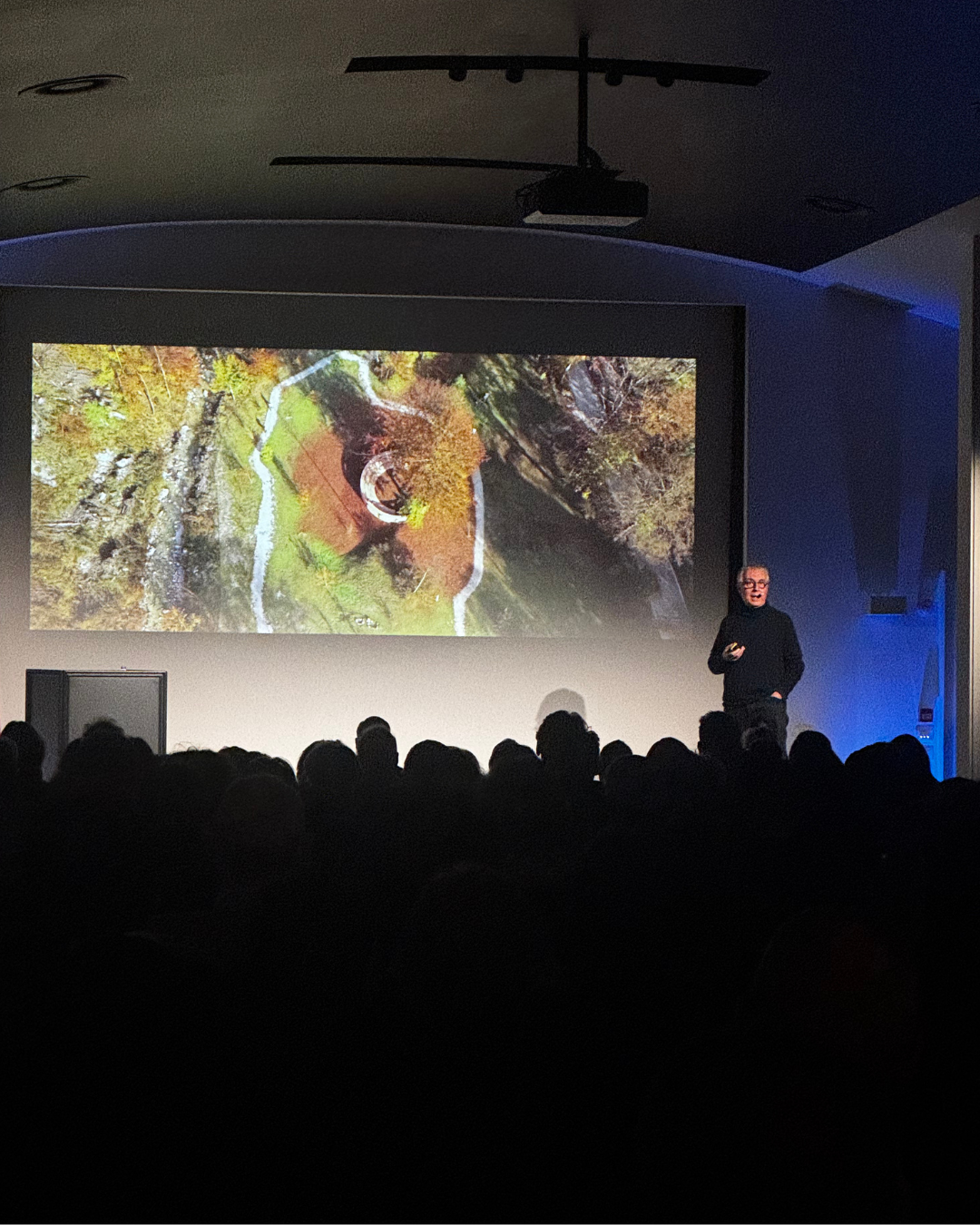
Lecture by Stefano Boeri, Architect
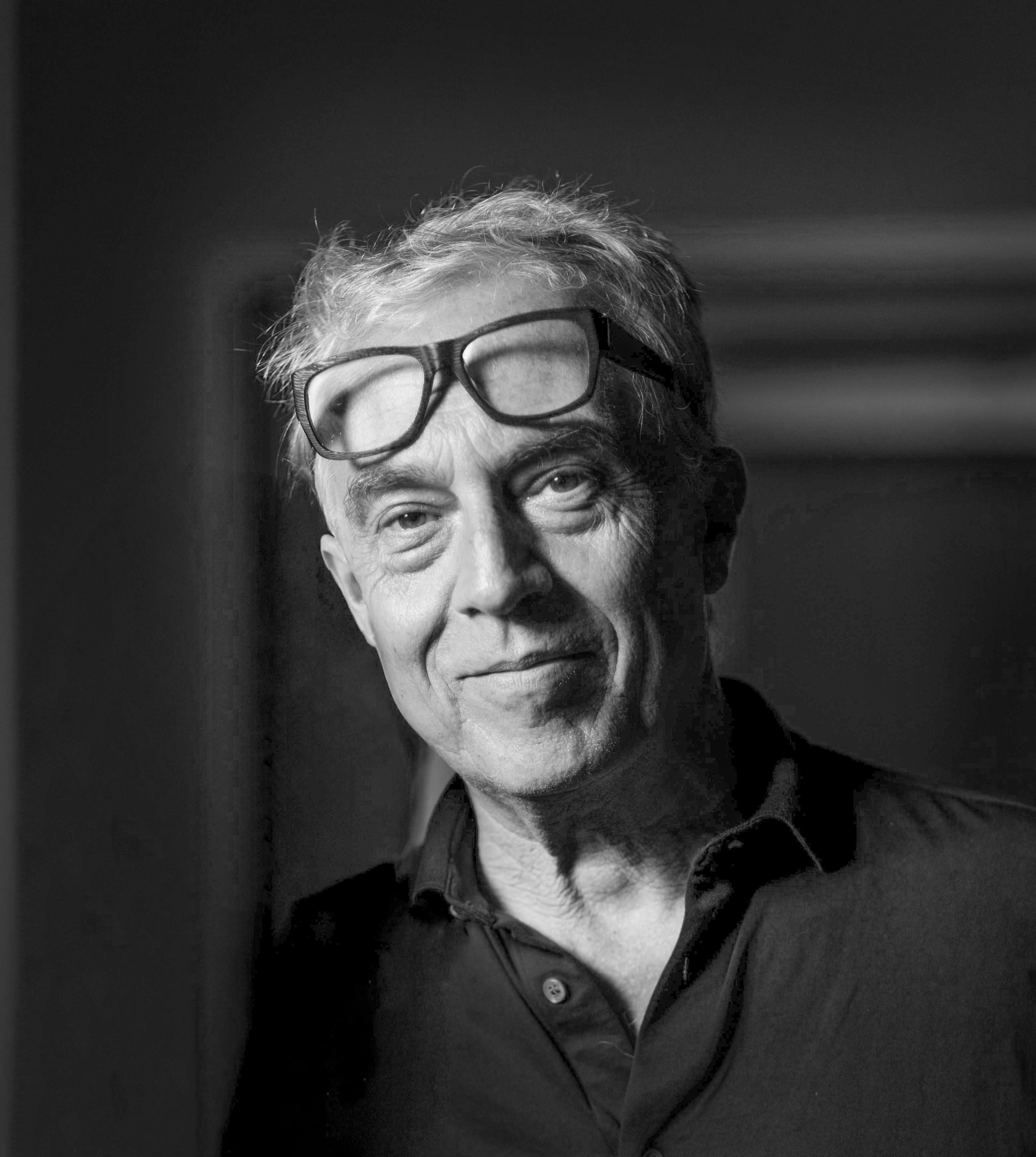
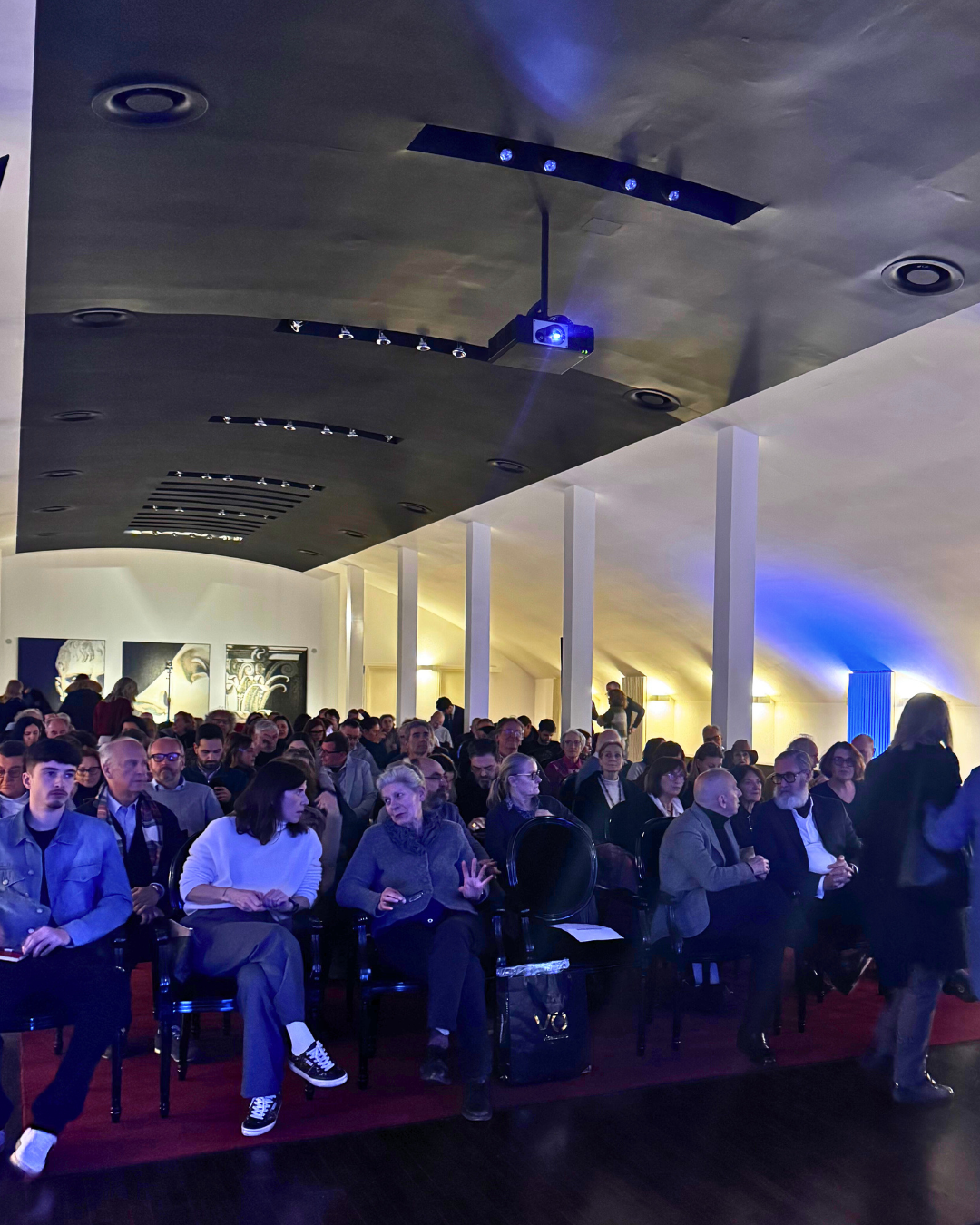
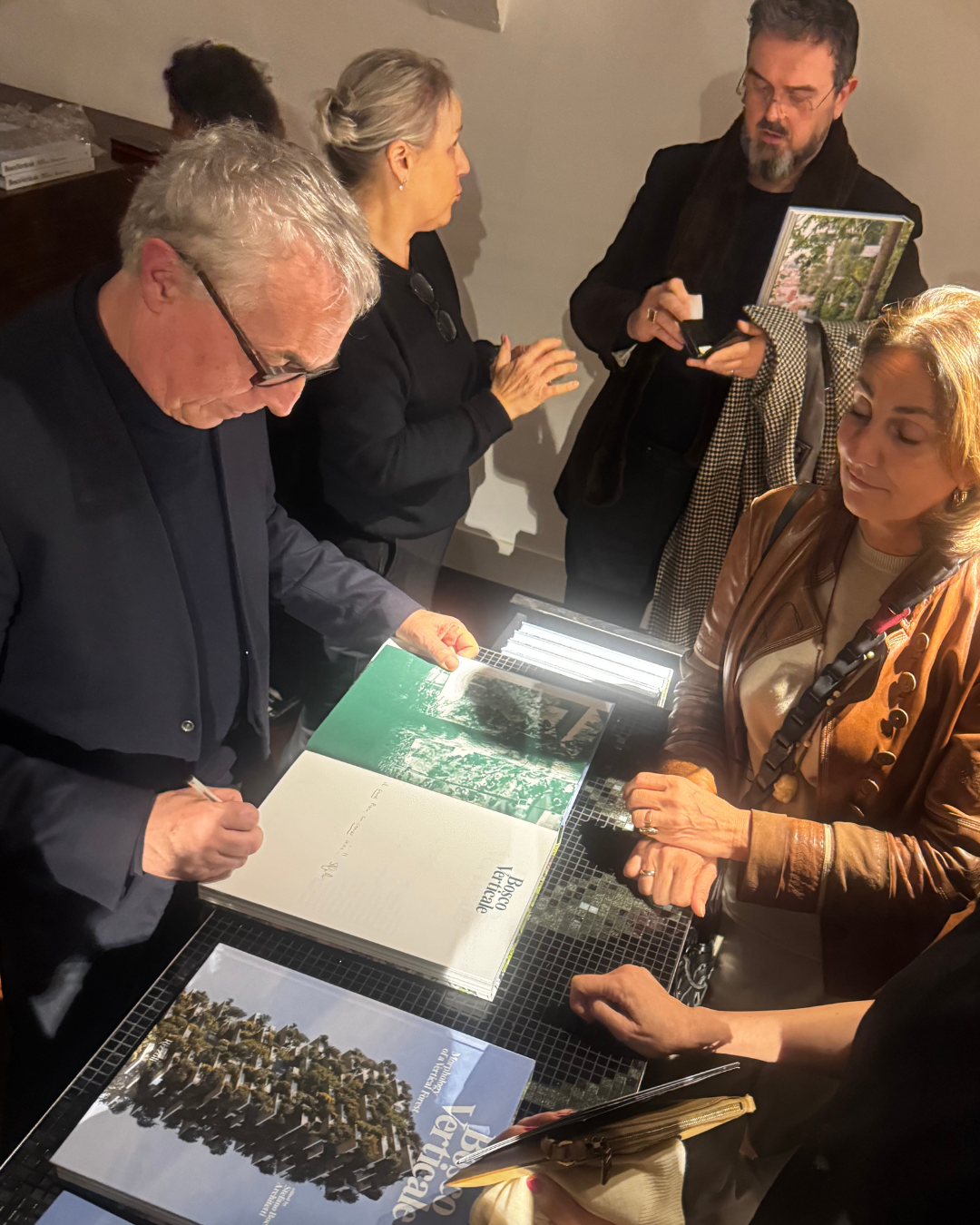
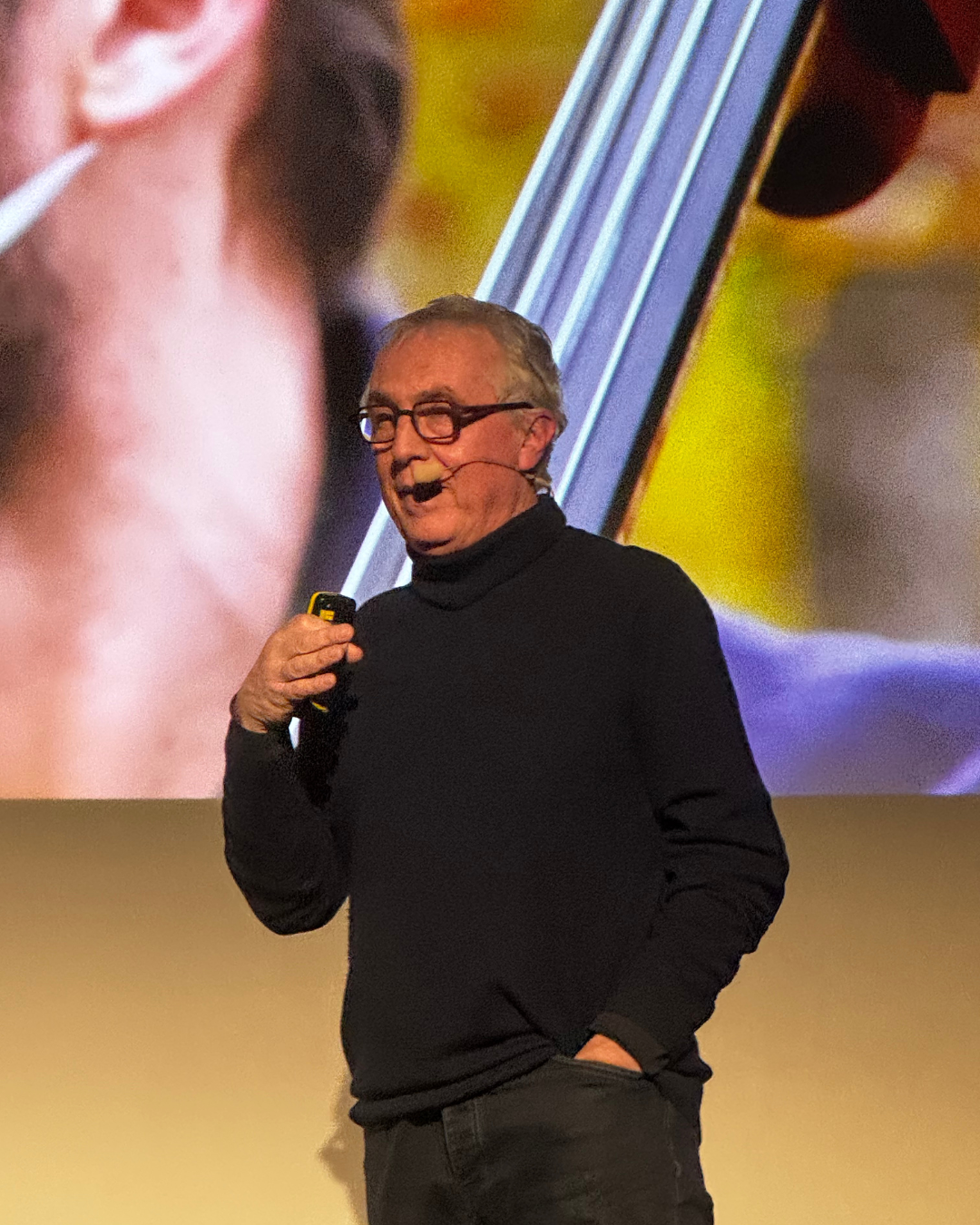
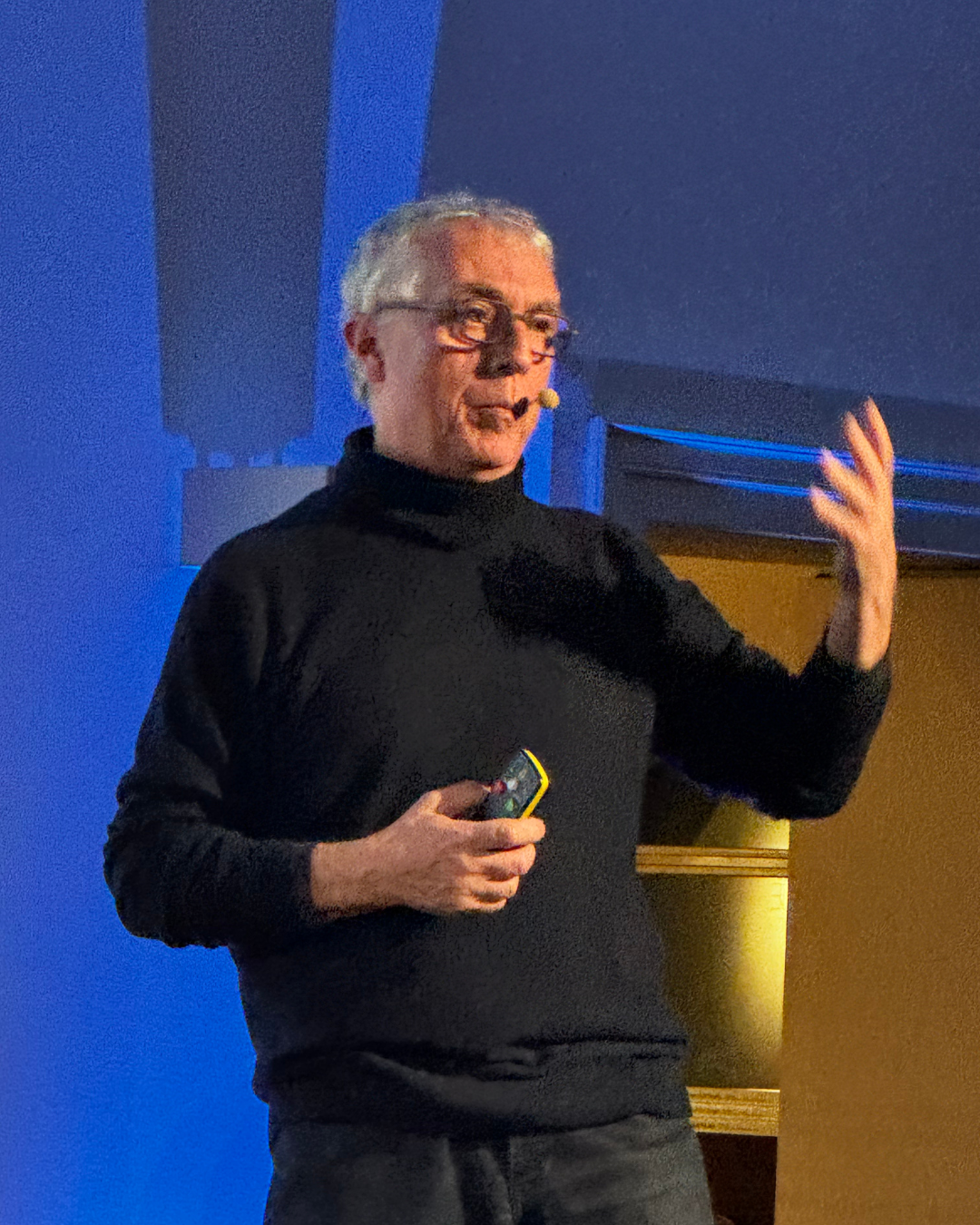
On Thursday, January 22, 2026, at 6:30 p.m., Fondazione Bisazza is pleased to host architect Stefano Boeri.
SOLD-OUT EVENT
To be added to the waiting list, please write to rsvp@fondazionebisazza.it.
Anyone interested in attending the conference online may connect via the Fondazione Bisazza YouTube channel.
Architects who attend the event by connecting through the Archiformazione link will be entitled to continuing education credits.
Stefano Boeri, architect and urban planner, is Full Professor of Urban Planning at Politecnico di Milano and Director of the Future City Lab at Tongji University in Shanghai.
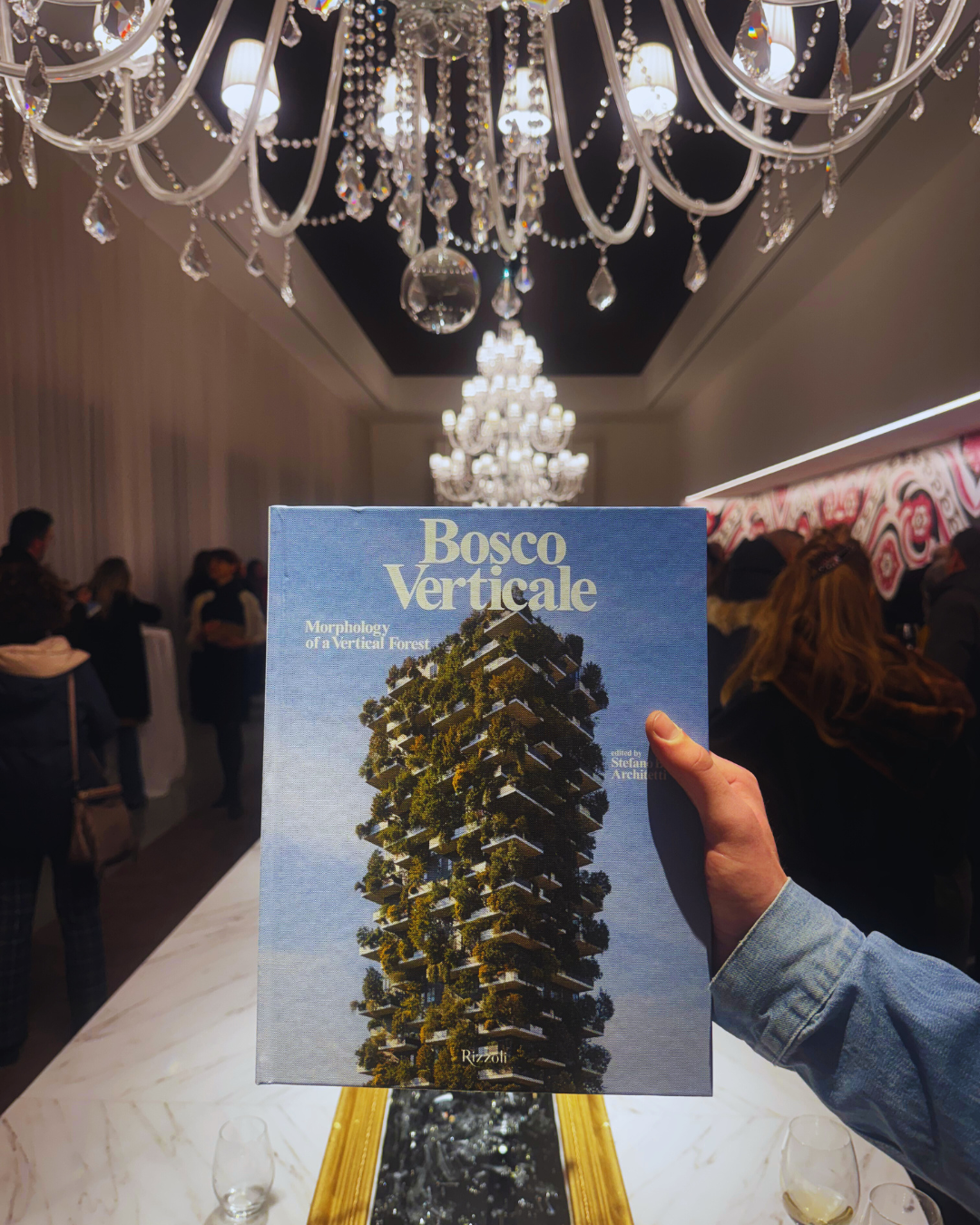
Architect of the Bosco Verticale (Milan, 2014) Stefano Boeri’s work ranges from urban visions to design, with a constant focus on the geopolitical and environmental implications of urban phenomena.
Among the main actors in the climate change debate in the field of international architecture, Stefano Boeri is also known for his researches on urban forestry and biodiversity implementation and he is co-chair and member of the scientific committee of the World Forum on Urban Forests (Mantua, 2018; Washington D.C. 2023). his design approach Green Obsession received the UN SDG Action Award in the “Inspire” category for supporting the implementation of the 17 UN Sustainable Development Goals.
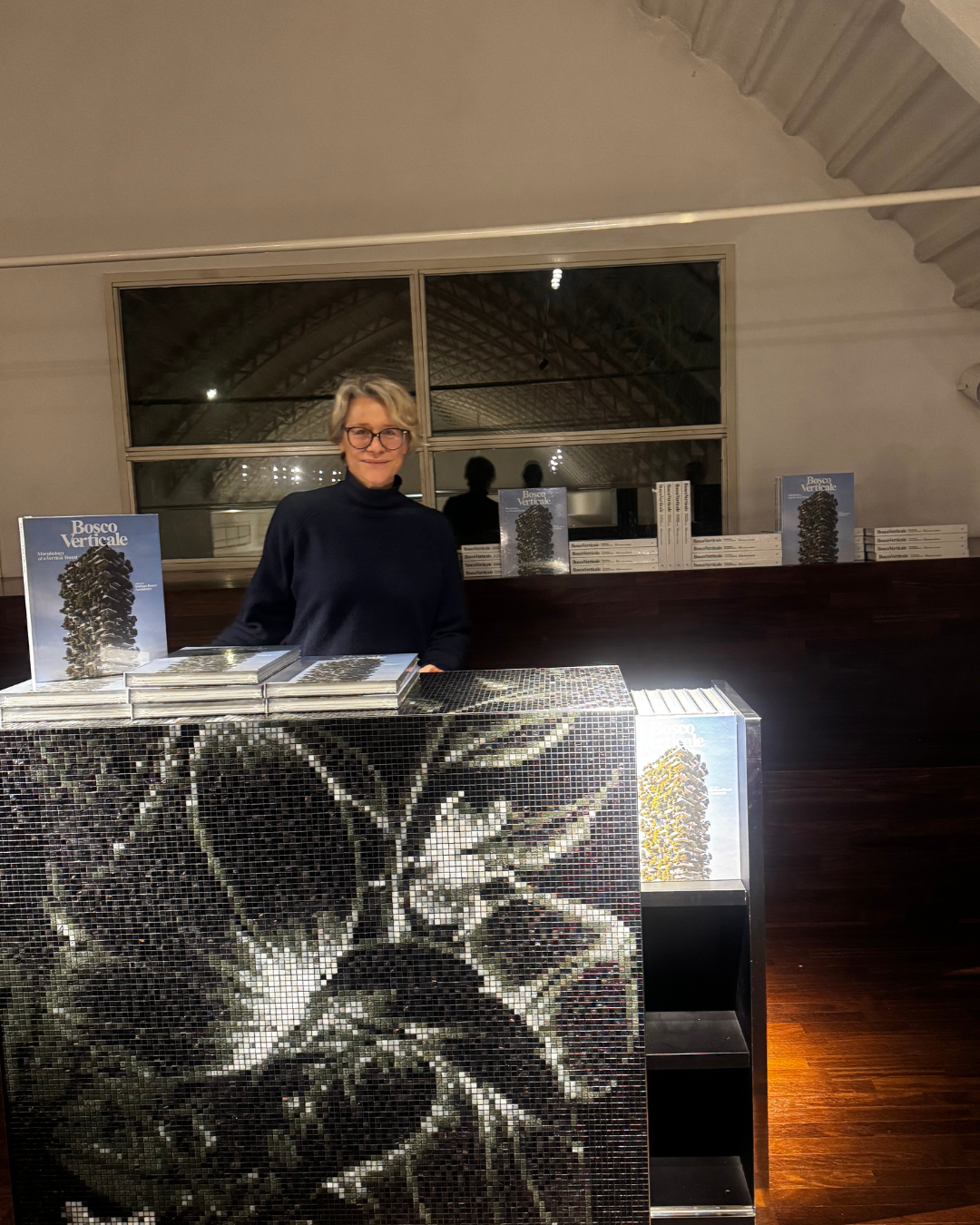
Vertical Forest. The idea for the first Vertical Forest was born while I was abroad, in Dubai, in 2007: as editor-in-chief of Domus, I was following the frenetic construction of a city in the desert made up of dozens of new towers and skyscrapers, all clad in glass. They all reflected sunlight and thus generated heat—in the air and especially on the urban ground inhabited by the community. Glass and mineral constructions in an increasingly artificial, mineral city. At the same time, I was beginning a project for two towers in the center of Milan, and suddenly the idea arose to create two “organic” towers: towers clad not in glass, but in leaves. Leaves of plants, shrubs, and above all leaves of trees, standing in contrast to the mineral city. From that moment on, our obsession with greenery took hold, starting from a building that connected the sphere of living nature with the city, and expanding to the concept of urban forestry—of which the Vertical Forest is an important component—on a broader scale, through which to rethink the very concept of the city. I am proud that the book we wrote, bringing together and summarizing our studies, research, and projects, was shortlisted as a finalist for the SDG Action Award, part of the UN’s SDG Action campaign, which honors initiatives and individuals who mobilize, inspire, and connect people to drive positive change.
The Role of Architecture in Creating Positive Impact: 10 Years of “Green Obsession.”
At the same time, the Vertical Forest is not an endpoint but a starting point; for us it is the first example, a case study that constantly gives us the opportunity to understand, study, and consequently improve the various aspects of this new architectural typology. The new Vertical Forests that have been built or are under construction represent steps forward for us, in different directions, toward refining and adapting the typology: by reducing costs through sustainable and innovative technological solutions, as in Eindhoven; by radically changing the urban landscape and public expectations for a future sustainable city in a place where pollution is a very serious problem, as in Huanggang, China; or by adapting to a different climatic context, as in Egypt. Imagining new ways of living in the cities of the future—from a perspective of greater integration with the environment and lower resource consumption (I am referring to land and energy use, but also to water consumption, which today is a crucial issue)—is the challenge we must increasingly set ourselves, and one that design and architecture must urgently embrace.
From Architecture to Design: A Multiscalar and Interdisciplinary Approach.
The same approach is also applied to interior projects, exhibitions, and design, where we constantly seek to develop solutions that revolve around the figure of the tree. This vision takes shape in projects such as Floating Forest, A Dead Forest for the Trojan Women, and Tree Room. Acting in this direction allows us to work toward awareness and sensitization at all scales, integrating different skills each time and building interdisciplinary dialogues. In particular, this enables us to approach projects with a focus on supply-chain sustainability and the circular economy, seeking to trigger virtuous processes of resource recovery and transformation.